


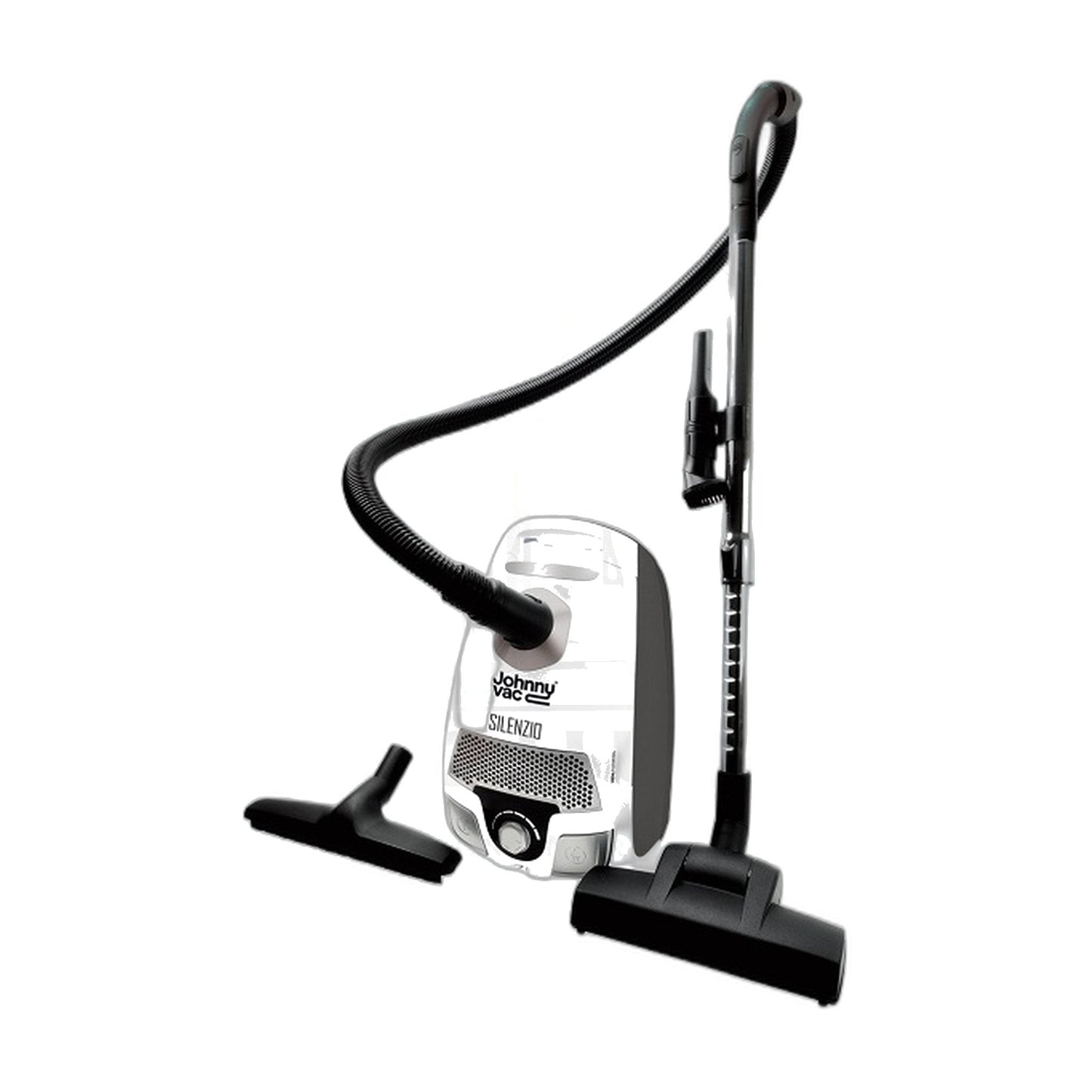
Johnny Vac Silenzio Turbo T...
$269.00
Product details
The Johnny Vac Silenzio Turbo Team SLNZ1000 combines a bagged canister with an air-driven carpet nozzle and a separate hard-floor brush. It gives you two floor-cleaning approaches in one compact canister package.
Features and configuration
- Air-driven Wessel-Werk carpet nozzle for brush agitation.
- Separate Wessel-Werk floor brush for hard surfaces.
- HEPA filtration, variable suction and a full-bag indicator.
- Automatic cord rewind and swivel casters.
- Includes hose, telescopic wand, combination upholstery/dusting tool, crevice tool and tool hanger.
Choosing and using your vacuum
The turbo nozzle’s brush is driven by airflow, so maintaining a clear hose, clean filters and an unfilled bag helps it perform properly. Use the hard-floor brush for appropriate smooth surfaces. For a motor-driven brush independent of suction airflow, compare an electric-powerhead canister.
Related products and supplies
Compare the Silenzio Blue straight-suction model or the XV10Plus electric-powerhead canister. Browse our vacuum cleaner collection.
